
H.265 vs H.264 Encoding: What's the difference and which is better?;
Video codecs are essential for compressing large video files into smaller sizes, allowing for easier storage and faster streaming. Two of the most commonly used codecs are H.265 and H.264. But what are the differences between the two? And which is better for you? We’ll explore the similarities and differences between H.265 and H.264, as well as their benefits and drawbacks.
What is a video codec?;
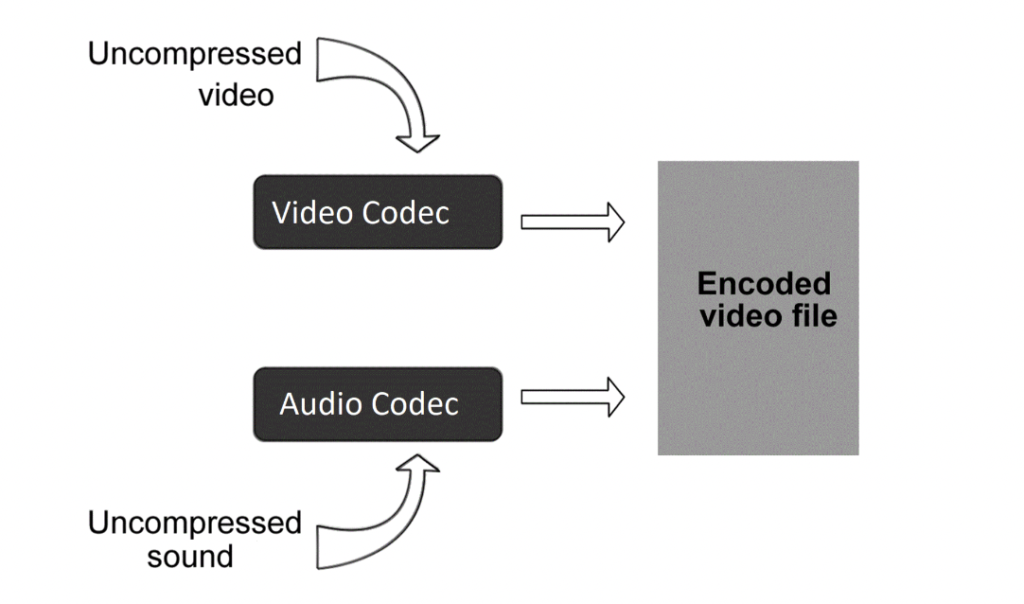
Before we dive into the differences between H.265 and H.264, let’s define what a video codec is. A codec is a software tool used to compress and decompress digital video files. Without a codec, video files would be much larger and take much longer to transmit or store. Video codecs use complex algorithms to compress video files while maintaining their visual quality. Now that we’ve clarified the definition of codecs, let’s take a closer look at H.264 and H.265.
What is H.264?;
H.264, also known as Advanced Video Coding (AVC), is a video codec that was released in 2003. Many video streaming services, such as YouTube and Netflix, use this codec today. H.264 was designed to provide high-quality video compression while maintaining a low bitrate, making it ideal for streaming video over the Internet.
What is H.265?;
H.265, also known as High Efficiency Video Coding (HEVC), is a video codec released in 2013. It is the successor to H.264 and was designed to provide better video compression while maintaining the same level of video quality. H.265 can achieve up to 50% more compression than H.264. It is therefore an ideal choice for high-definition video formats.
Overall, depending on your needs, both H.264 and H.265 are excellent video encoding solutions.
What is the difference between them?;
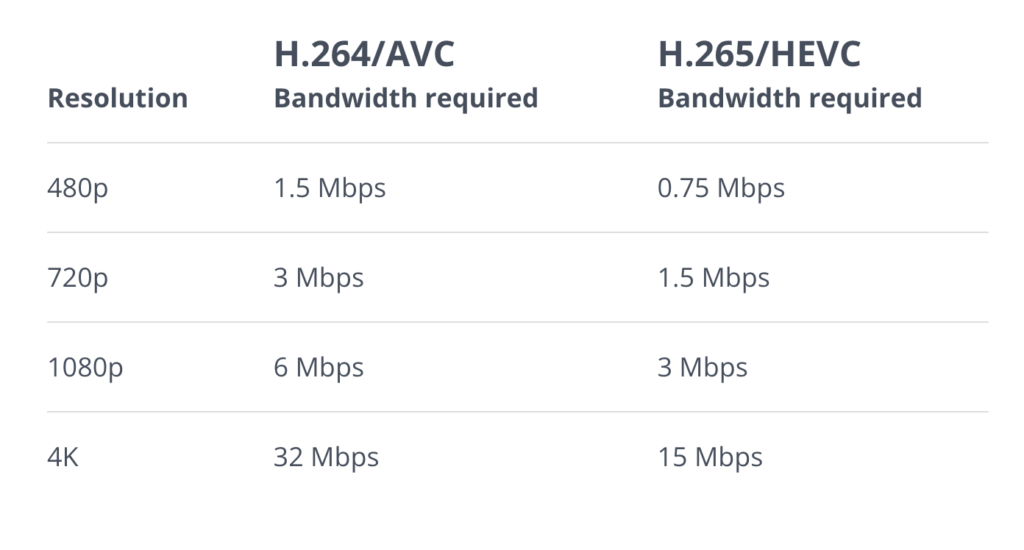
Both are powerful tools capable of producing high-quality results, but they vary. The main difference between H.265 and H.264 is their compression efficiency. H.265 can achieve up to 50% more compression than H.264, which means it can transmit the same video quality using less bandwidth or storage. This makes H.265 ideal for high-resolution video formats such as 4K and 8K.
The benefits of H.264
Although H.264 is an older codec, it still has some advantages over H.265. Here are some benefits of H.264:
Wide compatibility: H.264 is compatible with most devices and platforms, making it a good choice for video distribution.
Low complexity: H.264's compression algorithms are less complex than H.265's, making it easier to decode and encode video.
Lower processing requirements: Because H.264 is less complex than H.265, it requires less processing power to compress and decompress video, making it more efficient on older or less powerful devices.
The benefits of H.265
The main advantage of H.265 is its improved compression efficiency, which makes it ideal for high-resolution video formats such as 4K and 8K. Here are some other benefits of H.265:
Lower bandwidth requirements: H.265 requires less bandwidth than H.264 to transmit video of the same quality, making it ideal for streaming video over the Internet.
Improved video quality: Because H.265 uses more advanced compression algorithms, it can provide better video quality than H.264 at the same bit rate.
Reduced storage requirements: H.265's improved compression performance means video files take up less space on storage devices, such as hard drives and memory cards.
Which is better for you?;
The answer to this question depends on your specific needs. If you are working with high-resolution video formats such as 4K and 8K, H.265 is the best choice due to its improved compression efficiency. However, if you are working with older devices or platforms that may not support H.265, or if you are streaming video over a limited bandwidth connection, H.264 may be the best choice.
Another factor to consider is the purpose of the video. If you’re creating videos for online streaming platforms like YouTube or Netflix, H.264 is still the industry standard, and most platforms won’t accept H.265 encoded videos. However, if you’re creating videos for personal use or for a specific purpose, such as archiving or high-quality presentations, H.265 may be the better choice.

It's also worth noting that while H.265 provides better compression performance, it requires more processing power to encode and decode video, meaning it may not be the best choice for older or less powerful devices. H.264, on the other hand, requires less processing power, making it more efficient on older or less powerful devices.
In short, the choice between H.265 and H.264 depends on your specific needs and the purpose of the video. If you are working with high-resolution video formats or want to reduce storage and bandwidth requirements, H.265 is the better choice. However, if you are working with older or less powerful devices, or if you are creating videos for online streaming platforms, H.264 may be the better choice.
Conclusion
In conclusion, H.265 and H.264 are both powerful devices that have their own unique advantages and disadvantages. While H.265 provides better compression performance and video quality for high-resolution video formats, H.264 is still a viable option for compatibility and low complexity. Choosing the right codec depends on your specific requirements.